
Traveling solo as a woman can be an incredibly empowering and enriching experience. It offers unparalleled freedom to explore the world at your own pace and discover hidden gems off the beaten path. However, safety should always be a top priority for any female solo traveler. This article provides essential safety tips to help women navigate the world confidently and securely, empowering them to embrace the joys of solo travel while mitigating potential risks. From pre-trip planning and on-the-ground awareness to digital security and emergency preparedness, we’ll cover the key aspects of staying safe while traveling alone.
Whether you’re a seasoned adventurer or planning your first solo trip, understanding the specific safety concerns women face while traveling is crucial. This guide addresses those concerns head-on, offering practical advice and actionable strategies to enhance your safety and peace of mind. Learn how to research your destination thoroughly, choose safe accommodations, protect your valuables, and communicate effectively while abroad. By following these tips for female solo travelers, you can minimize risks and maximize your enjoyment of this liberating and transformative experience.
Research Your Destination Thoroughly
Before embarking on your solo adventure, dedicate time to thorough research about your chosen destination. Understanding the local culture, customs, and laws is paramount for a safe and enjoyable trip. This knowledge will help you navigate unfamiliar situations with confidence.
Research transportation options available at your destination, including public transport, taxis, and ride-sharing services. Identifying safe and reliable transportation methods beforehand is crucial, especially for late-night travel.
Familiarize yourself with local emergency numbers and the location of your country’s embassy or consulate. Knowing where to seek assistance in case of an emergency offers valuable peace of mind.
Choose Safe Accommodation
Prioritizing safety when selecting accommodation is paramount for solo female travelers. Thoroughly research potential lodgings, checking reviews for mentions of safety and security measures. Opt for accommodations in well-lit and reputable areas.
Consider factors like 24-hour reception, secure entry systems, and on-site security personnel. When booking online, scrutinize the details and verify the legitimacy of the establishment.
Upon arrival, familiarize yourself with emergency exits and safety procedures. Share your itinerary and accommodation details with a trusted contact back home.
Be Cautious with Social Media Posts

While it’s tempting to share your amazing travel experiences in real-time, be mindful of oversharing. Avoid posting details that reveal your exact location or accommodation while you’re still there. This information could make you a target for opportunistic criminals.
Consider delaying your posts until after you’ve left a location. Share photos and stories retrospectively, preserving your safety in the present. Prioritize your security by being discreet about your current whereabouts on social media.
Dress According to Local Norms
Dressing respectfully and in accordance with local customs is a key aspect of safe and responsible travel, particularly for women traveling alone. It demonstrates cultural sensitivity and can help you blend in, potentially minimizing unwanted attention. Researching the local dress code before your trip is essential.
In some cultures, dressing modestly is crucial. This might involve covering your shoulders, knees, or even your head. While it might differ from your usual style, adhering to these norms can significantly enhance your safety and show respect for the local community.
Avoid wearing flashy jewelry or expensive accessories that could make you a target for theft. Opting for simple and practical attire can often make you less conspicuous and contribute to a more positive travel experience.
Carry a Personal Alarm or Safety App
A personal safety alarm can be a powerful deterrent against potential threats. The loud noise can startle an attacker and draw attention from others nearby. Choose a compact, easy-to-activate alarm that can be attached to a keychain or bag.
Alternatively, consider downloading a personal safety app to your smartphone. Many apps offer features such as GPS tracking, emergency alerts, and one-touch check-ins with pre-selected contacts. Ensure the app is reliable and has positive user reviews before relying on it during your travels.
Trust Your Instincts
Perhaps the most important safety tip is to trust your instincts. If a situation, person, or place feels unsafe, it probably is. Don’t dismiss that feeling. Remove yourself from the situation immediately.
This might mean leaving a restaurant, changing hotels, or declining a seemingly friendly invitation. Your safety is paramount and should never be compromised for politeness or fear of appearing rude.
Remember, you are your own best advocate. If something feels off, it likely is. Trust your gut.
Plan Your Itinerary Carefully
A well-planned itinerary is crucial for solo female travelers. Knowing where you’re going and what you’re doing each day provides a sense of security and minimizes the chances of unexpected situations. Research your destinations thoroughly, including transportation options, local customs, and potential safety concerns.
Share your itinerary with a trusted friend or family member back home. Regularly check in with them so they know your whereabouts. This provides an extra layer of safety and peace of mind for both you and your loved ones.
Book accommodations and transportation in advance, especially during peak season. This not only ensures you have a place to stay and a way to get around but also allows you to research the safety and reputation of different providers.
Stay in Touch Regularly
Maintaining consistent communication with someone back home is crucial for solo female travelers. Establish a check-in schedule before you depart and stick to it. This could be a daily email, text message, or call.
Share your itinerary, including accommodation details and planned activities. Inform your contact person if any changes occur. This allows someone to know your whereabouts and raise the alarm if they don’t hear from you as expected.
Consider using a location-sharing app with a trusted friend or family member. This provides an added layer of security by allowing them to monitor your movements in real-time.
Avoid Traveling Alone at Night
Traveling alone at night, especially as a woman, significantly increases safety risks. Whenever possible, arrange your transportation and accommodation so that you arrive at your destination during daylight hours. This allows you to familiarize yourself with the area while it’s still light and reduces the chances of encountering dangerous situations.
If nighttime travel is unavoidable, take extra precautions. Utilize reputable transportation services, such as pre-booked taxis or ride-sharing apps with safety features. Share your travel details with a trusted contact, including your route, estimated arrival time, and transportation information. Stay alert and aware of your surroundings throughout your journey.
Have a Backup Plan
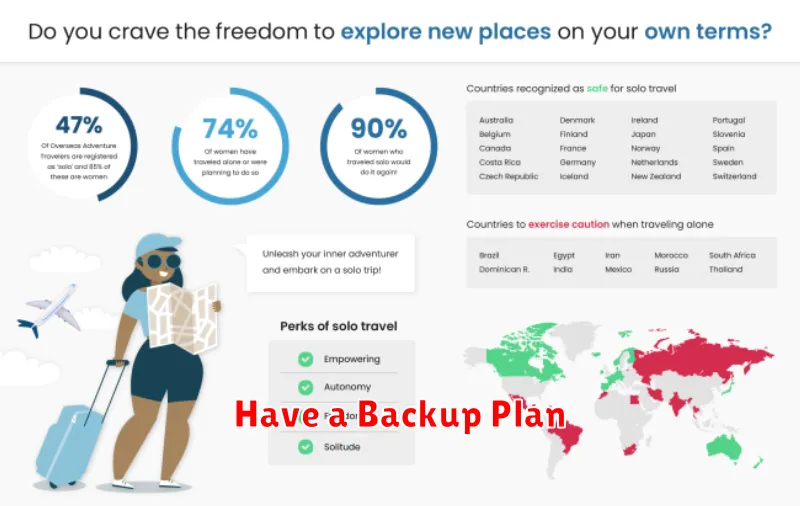
Unforeseen circumstances can occur while traveling. A backup plan helps mitigate potential issues. Inform someone trusted at home about your itinerary, including flight details and accommodation information. Regularly check in with them.
Carry extra copies of important documents like your passport, visa, and travel insurance. Store these separately from the originals. Having digital copies saved securely online is also advisable. Consider packing an extra credit or debit card and some local currency in a separate, safe location.
Research alternative transportation and accommodation options in advance, in case your original bookings are disrupted. Familiarize yourself with local emergency contacts and procedures at your destination.
